Grant-Interested Is Not the Same as Grant-Ready — Here Is How to Tell the Difference
Short Answer
Grant readiness is not about passion or a great idea — it is about having your foundational documents formalized, organized, and ready to hand to a funder at any time. Gitta Williams explains what grant readiness actually means, the documents funders expect, and the gaps she sees most often before nonprofits in the Inland Empire and Southern California apply.
The Real Question Behind the Search
You have a mission. You have a program. You have people in your community who need what your organization provides. So you start looking for grants, maybe reach out to a grant writer, and somewhere in that process someone asks you a question that stops you cold: "Is your nonprofit actually ready to apply?"
Most nonprofit leaders answer yes. Many of them are wrong — not because their mission is weak, but because being passionate about your work is not the same as being prepared for what funders require.
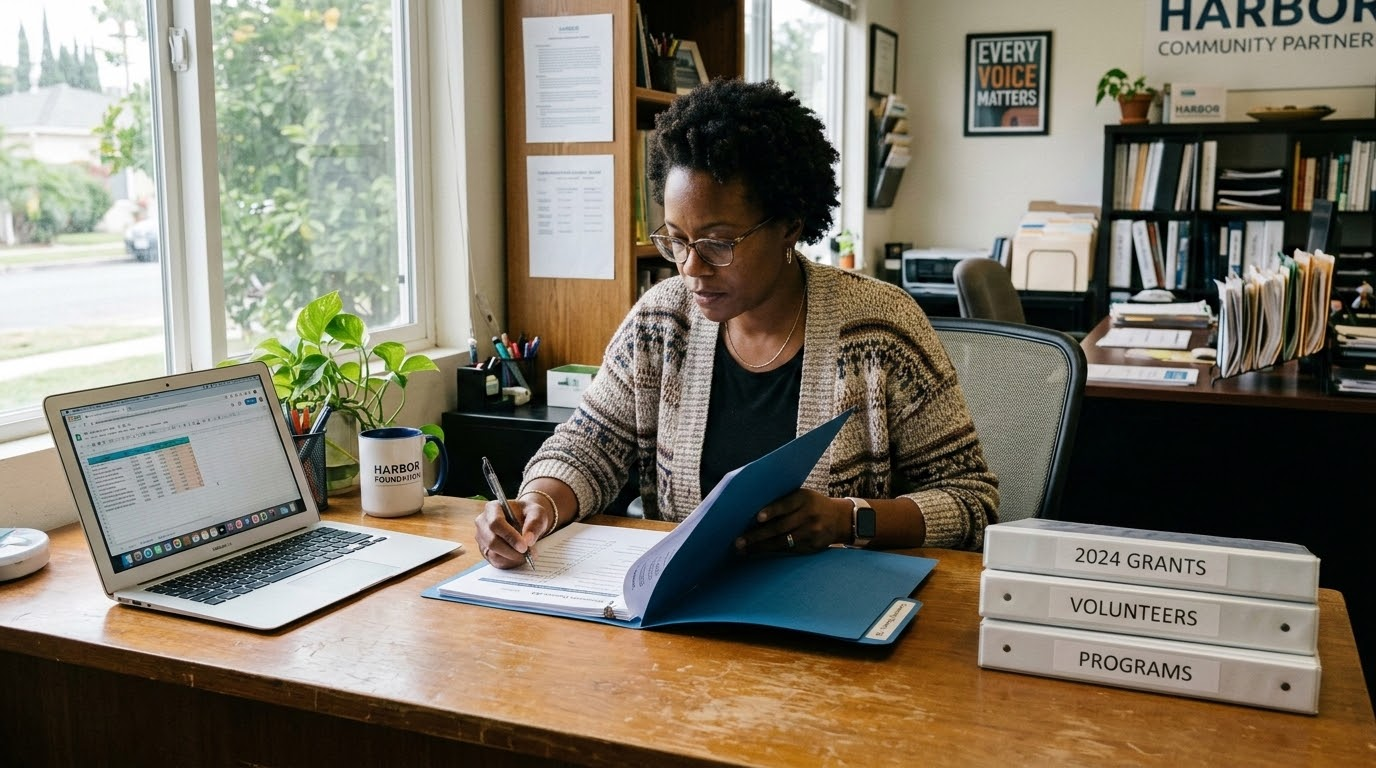
I work with nonprofit leaders in Moreno Valley, the Inland Empire, and Riverside County every day. One of the most consistent patterns I see is this: organizations come in with strong programs and genuine community impact — but when it comes time to pull together the documents a funder will request, the gaps become clear fast.
This article is about helping you see those gaps before a funder does.
What Grant Readiness Actually Means
Grant readiness does not mean you have a great idea. It does not mean you have been serving your community for years. It does not even mean you have a website or a social media following.
When I talk about grant readiness, I mean something specific: your nonprofit has been formalized and all the preliminary documents needed to move forward are already in place — organized, written down, and ready to hand to a funder at any time.
That means documents like your articles of incorporation, bylaws, a board roster, and a work plan. It also means having a program budget and a narrative description that clearly explains the who, what, when, where, and why of your program. When a funder asks for these items, you should be able to provide them immediately — not scramble to create them under deadline pressure.
That is the difference between being grant-interested and being grant-ready.
Why This Matters Before You Spend a Dollar on Grant Writing
I see it frequently: a nonprofit leader spends money on a grant writer before the organization has the foundational documents that writer needs to do the job effectively. The result is wasted time, wasted fees, and often a rejected application — or no application submitted at all.
A grant writer can craft compelling language. What they cannot do is create your board structure, formalize your program budget, or establish your organizational documents. Those are your responsibility before the writing begins.
Funders in the Inland Empire, Riverside County, and across Southern California evaluate more than the quality of a proposal's language. They review the supporting documents behind it. If those documents are missing, outdated, or disorganized, the application loses credibility regardless of how well the narrative reads.
Grant Readiness Document Status — Check Your Organization Now
| Document or Requirement | What It Proves to Funders | Do You Have This? |
|---|---|---|
| Articles of Incorporation | Legal existence of the nonprofit | Yes / No / Unsure |
| Bylaws (current, not a generic template) | How the organization is governed | Yes / No / Unsure |
| IRS Determination Letter | Federal tax-exempt status | Yes / No / Unsure |
| State Tax-Exempt Status (California FTB) | California compliance and eligibility | Yes / No / Unsure |
| Board Roster (current, named members) | Active leadership structure | Yes / No / Unsure |
| Mission and Vision Statement (written) | Organizational purpose and direction | Yes / No / Unsure |
| Program Description (written) | Who, what, when, where, and why | Yes / No / Unsure |
| Program Budget (line-item) | True cost of delivering the program | Yes / No / Unsure |
| Operating Budget | Overall organizational financial picture | Yes / No / Unsure |
| Work Plan | Timeline and activities for the program | Yes / No / Unsure |
| Expected Outcomes (documented) | Measurable results the program will produce | Yes / No / Unsure |
| Candid.org Profile (active) | Funder-facing transparency and verification | Yes / No / Unsure |
If you answered No or Unsure to three or more of these, your organization may be grant-interested but not yet grant-ready.
Readiness Gaps I See Most Often Before Nonprofits Apply
Beyond the document table above, here are the specific readiness areas I see nonprofit leaders overlook most frequently:
1. Is your nonprofit legally formed and active?
This means incorporated at the state level and holding valid federal and state tax-exempt status. Many founders get their federal determination letter from the IRS and stop there — never realizing they also need to file for state tax-exempt status in California. That gap alone can block a grant application. If either status has lapsed or was never completed, grant writing cannot move an application forward with most funders.
2. Are your bylaws current?
Bylaws from five years ago that have never been reviewed or updated are a readiness problem. I see this often. Funders and grant reviewers request bylaws as a governance document, and outdated bylaws can raise immediate credibility concerns. Your bylaws should be reviewed annually with your board — because policies, procedures, and staffing change over time. If you hired staff while running on old bylaws, those employees may have been following guidelines that no longer reflect how the organization actually operates.
3. Is your program described in writing?
A program that exists only in the founder's mind — or in informal conversations — cannot be effectively translated into a grant narrative. The who, what, when, where, and why must be documented before a writer can do anything productive with them. I ask every client: if you had to send a funder a written description of your program by tomorrow morning, could you?
4. Does your board roster reflect real, active board members?
A board roster with names but no documented participation, no current meeting records, and no updated contact information is a governance gap that experienced funders will notice. Your board roster, meeting agendas, and minutes should be organized and current — kept in both a physical binder and an electronic folder.
5. Do you have a written program budget?
Not a rough estimate. A real, line-item program budget that reflects the actual cost of running your program. I recommend building the budget at 100% capacity first — so you can see the true cost and plan strategically around it. This is one of the first things a grant writer will ask for, and one of the first things funders review.
6. Are your expected outcomes defined?
Funders do not fund activity. They fund results. If your organization cannot clearly state what measurable change your program will produce — the number of people served, the behavior change demonstrated, the community impact documented — the application will struggle regardless of how strong the narrative sounds.
Common Mistakes I See Before Nonprofits Apply for Grants
These are the recurring missteps that keep otherwise strong organizations stuck in grant-interested territory — and what to do instead.
| Common Mistake | What to Do Instead |
|---|---|
| Believing a 501(c)(3) letter means being fully grant-ready | Treat tax-exempt status as a starting point — then build the document foundation around it |
| Pulling documents together after finding a grant deadline | Build readiness before you need it so you are prepared when the right opportunity appears |
| Keeping the program plan only in the founder's head | Write down the who, what, when, where, and why so it can be reviewed, shared, and funded |
| Skipping the Candid.org profile | Create and maintain an active Candid profile — many regional funders verify it before reviewing proposals |
| Treating grant readiness as a one-time task | Review bylaws, board rosters, financials, and program materials before every grant cycle |
| Hiring a grant writer before foundational documents exist | Get your documents in order first — grant writers need your foundation to do their job effectively |
Quick Answers
What is the fastest way to find out if my nonprofit is grant-ready?
Can I apply for a grant while I am still gathering my readiness documents?
Does a small or newer nonprofit need the same readiness documents as a larger one?
What if my program is strong but my paperwork is disorganized?
How often should a nonprofit review its grant readiness?
What if I am a new nonprofit and just received my 501(c)(3) determination letter?
Find Out Where Your Nonprofit Really Stands
Stop wondering whether you are grant-ready or just grant-interested. Take The Document Pro's Grant Readiness Checklist to see exactly which foundational documents you have, which are missing, and which need updating before you approach a funder or hire a grant writer.
Disclaimer: This article is for educational and organizational planning purposes only. It does not provide legal, tax, financial, or grant approval advice and does not guarantee funding, eligibility, or funder acceptance.